Home › Blog › Disruption in RCS journey for a better cause -Trust as Service
Disruption in RCS journey for a better cause -Trust as Service
November 27th, 2026
In early 2026, the Indian business messaging landscape has reached a pivotal junction.
The “Wild West” era of RCS (Rich Communication Services) is officially over, replaced by a sophisticated, carrier-controlled ecosystem that finally includes the iPhone but comes with strict new “roadblocks.”
The Great Unification: Android Meets iPhone
For years, RCS was handicapped in India because it couldn’t reach high-value iPhone users. That changed with Apple’s integration of the GSMA Universal Profile.
Universal Reach
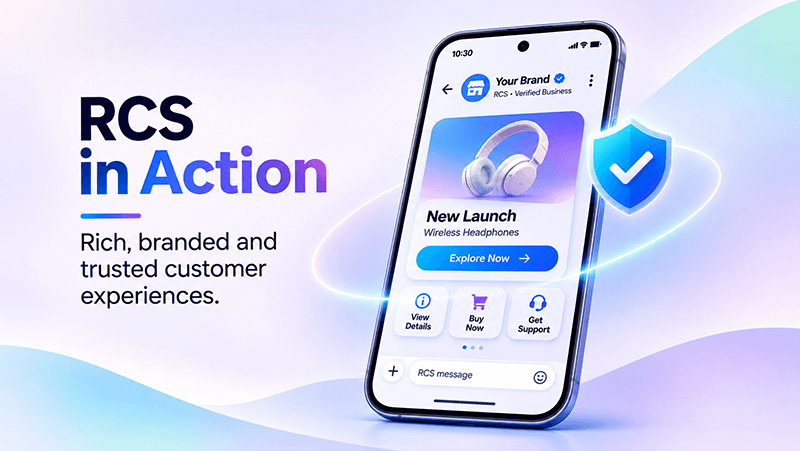
As of 2026, RCS is no longer "the Android alternative." With iOS support, businesses can finally send rich media-carousels, high-res videos, and interactive buttons-to nearly 100% of smartphone users in India.
GSMA 4.0 Standards
New February 2026 specifications from the GSMA have standardized Interoperable End-to-End Encryption (E2EE). Whether an RCS message is sent from a Pixel to an iPhone or vice-versa, it now carries the same security and feature parity once reserved for iMessage or WhatsApp.
The New Roadblocks: DND and the "Airtel Gate"
While reach has expanded, the “free pass” for promotional blasting has been revoked. Indian operator—l Airtel and have successfully integrated their network intelligence directly into the RCS pipeline. Other operators –Jio and Vi will definitely follow the same
1. The Airtel-Google AI Guard
In March 2026, a landmark partnership between Airtel and Google introduced a dual-layer filtering system. Every RCS message is now cross-referenced against Airtel’s Network-Level AI and Google’s Spam Guard.
DND Scrubbing: Unlike the early days, RCS now strictly respects the TRAI DND (Do Not Disturb) Registry. If a user is on DND, promotional RCS messages are automatically blocked or “throttled” at the carrier level.
DLT Integration: Businesses must now register RCS templates on Distributed Ledger Technology (DLT) platforms, mirroring the strict compliance rules of traditional SMS.
2. The Identity Crisis for Marketers
These interventions have created a significant challenge: The Delivery Gap.
Reach vs. Regulation
While 100% of users can receive RCS, roughly 30-40% of the premium audience in India is registered for DND. This makes RCS feel less like a “WhatsApp killer” and more like “SMS 2.0 with pictures.”
The Apple Privacy Switch
On iOS, Apple has introduced a “Business Messaging” toggle. If users feel overwhelmed by rich-media spam, they can disable the channel entirely, a risk that doesn’t exist as easily on WhatsApp.
The Future Trend: The "Orchestration" Era
By late 2026, the trend for Indian businesses has shifted from choosing one channel to Smart Fallback Orchestration:
Primary Channel (RCS)
Used for high-engagement marketing to non-DND users because it is significantly cheaper (₹0.15 to ₹0.4 ) than WhatsApp(₹0.9 to ₹1.2)
Secondary Channel (WhatsApp)
Triggered automatically if the RCS message is blocked by the carrier’s DND filter, ensuring the high-value lead isn’t lost.
Final Fallback (SMS)
Used for critical alerts (OTPs) when data connectivity is unavailable.
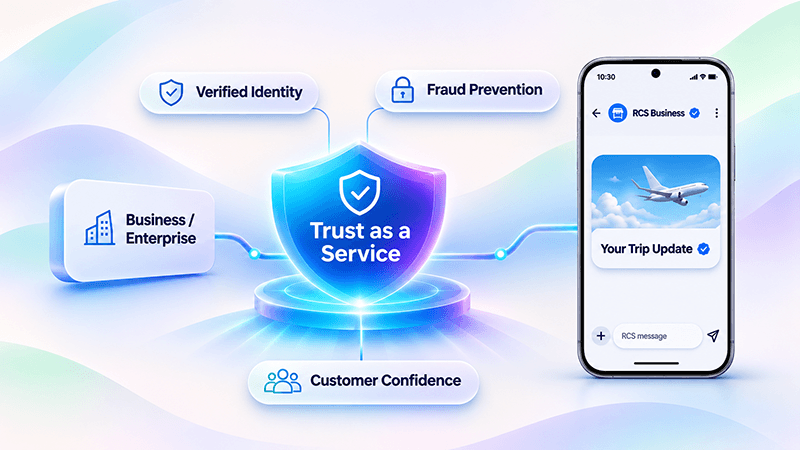
The industry is moving toward Trust-as-a-Service. With the GSMA standardising security and Indian telcos enforcing DND, RCS will become a “clean” channel. It may have lost its ability to “spam,” but it has gained the legitimacy required to handle India’s massive ₹3,000 Crore business messaging market.
The question remains the same for Marketer: “How can we reach into Inbox of the target audience and which channel is best spend.”
This site uses cookies to improve your online experience, allow you to share content on social media, measure traffic to this website and display customised ads based on your browsing activity. Read more